


February 17, 2025
Tracing The Essence Of Warli Paintings
Warli Art: Driven By Everyday Life Stories Of An Ancient Community
India is home to over 3000 indigenous communities, many of which were the country’s earliest inhabitants. Often denigrated as tribals, these communities have used art to express their unique cultural heritage and stories.
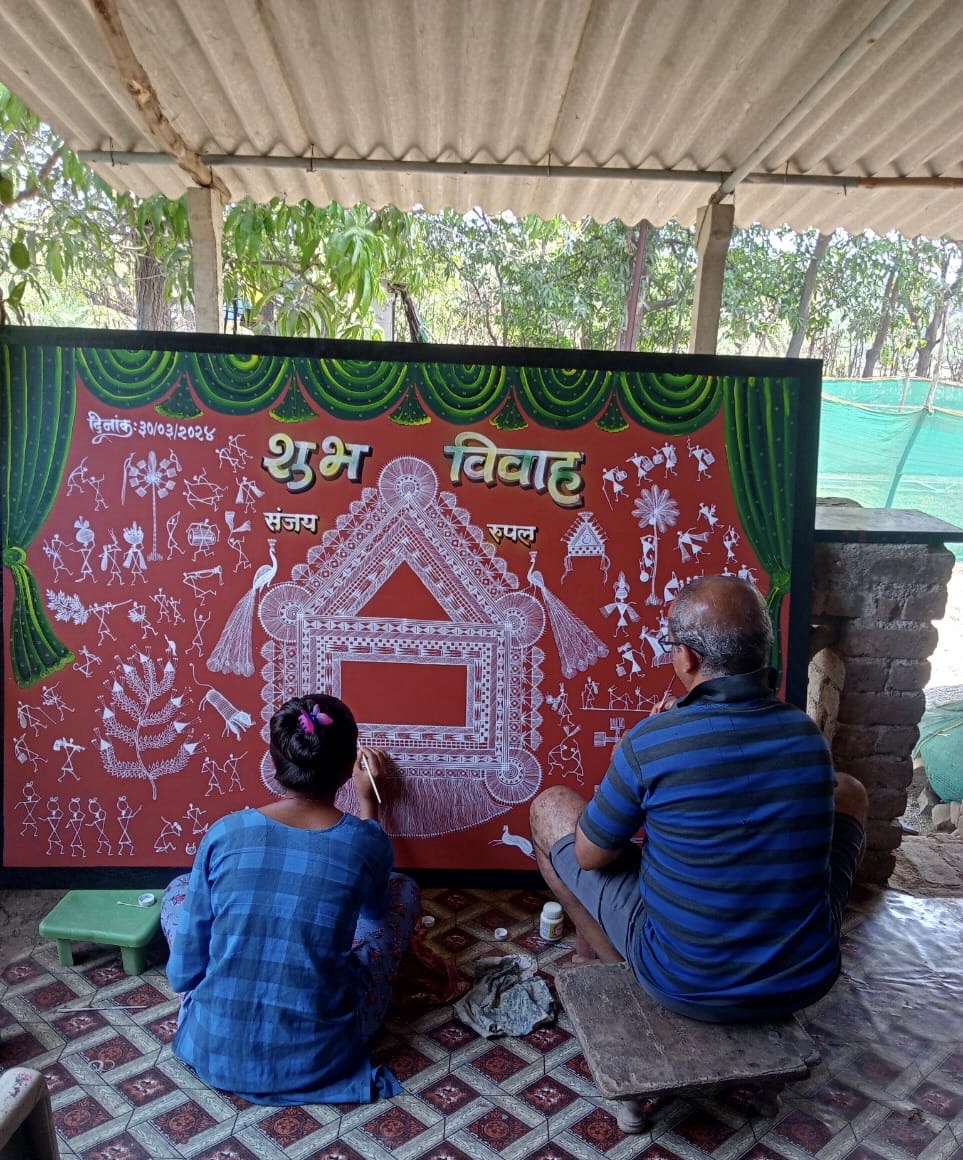
The Warlis are one such tribe belonging to the mountainous and coastal regions of Maharashtra and Gujarat. This tribe is famous for its distinctive art – simple geometric shapes that tell tales of village life and its people’s customs and traditions on a canvas of walls plastered with mud and cow dung.
The paintings use a white pigment made by mixing rice flour, water, and natural gum as a binder. To create texture, the Warli people fashioned brushes from chewed bamboo sticks.
Traditionally, Warli art was made by women to celebrate momentous occasions like weddings, harvests, festivals, etc. It was their way of preserving the moment for posterity in an era without cameras.
Their paintings showcase traditions and customs from antiquity, piquing anthropologists interested in decoding the culture and social structure of early human inhabitants. But Warli Art is so much more than a window to an ancient community – the symbols used in the paintings are often focused around Mother Nature and elements like birds, animals, water bodies, sky, celestial bodies, etc.
Unlike other traditional arts that feature mythological themes, Warli art is known for drawing influence from the simple and mundane lives of its people. The Warli community is deeply connected to nature and has immense respect for wildlife, which is amply reflected in the use of natural elements in its paintings.
At SKAC, we have featured Warli Artist , who proudly carries his community’s legacy.
His paintings feature traditional elements such as folk dances, tarpa, daily routines, nature, and deities like Palaghata Devi, the Goddess of Fertility. They also feature sun and moon motifs, human figurines, and animals, utilising a vocabulary of circles, squares, and triangles. He also incorporates modern themes like vehicles and buildings, emphasising the community’s role in an ever-evolving society.

